

Does Skin Tightening Cream Actually Work?
Last updated: September 27, 2026
You’ve been applying skin tightening cream every morning and night, hoping to see firmer skin. Despite your consistent efforts, that loose, sagging skin remains. If you’re searching for a solution that actually delivers visible results, you’re not alone. For skin laxity, including loose skin after weight loss, a topical approach alone is usually not enough.
Does skin tightening cream actually work?
Skin tightening cream rarely produces noticeable lifting or firming results. Common ingredients such as hyaluronic acid and peptides mainly hydrate and smooth the outer skin layer. Retinoids, especially prescription strengths, can modestly improve fine lines and texture over months of use, but no cream has been shown to lift truly loose skin. The skin’s natural barrier limits how deeply most of these formulations can penetrate, so improvements tend to be temporary and superficial, affecting surface texture rather than true skin laxity. For meaningful tightening, treatments that address the structural layers beneath the surface are usually needed.
Why skin tightening creams rarely deliver visible results
The outer layer of skin, called the epidermis, acts as a protective shield that prevents large molecules from passing through. Many skin tightening cream ingredients are too large to penetrate this barrier effectively. Collagen molecules, for example, cannot be absorbed through topical application because they remain on the surface where they simply provide temporary moisturization. Even products promising dramatic transformation work mainly on the outer layers, so the results are minimal and short-lived. Loose skin after significant weight loss usually needs a treatment that goes beyond what any cream can accomplish.
What makes RF microneedling more effective for skin tightening?
RF microneedling combines traditional microneedling with radiofrequency energy to reach and treat the deeper layers of skin where collagen production actually occurs. During treatment, ultrafine needles create micro-injuries in the skin while simultaneously delivering RF heat energy directly to the dermis. This dual-action approach triggers the body’s natural healing response, which can stimulate new collagen and elastin formation.
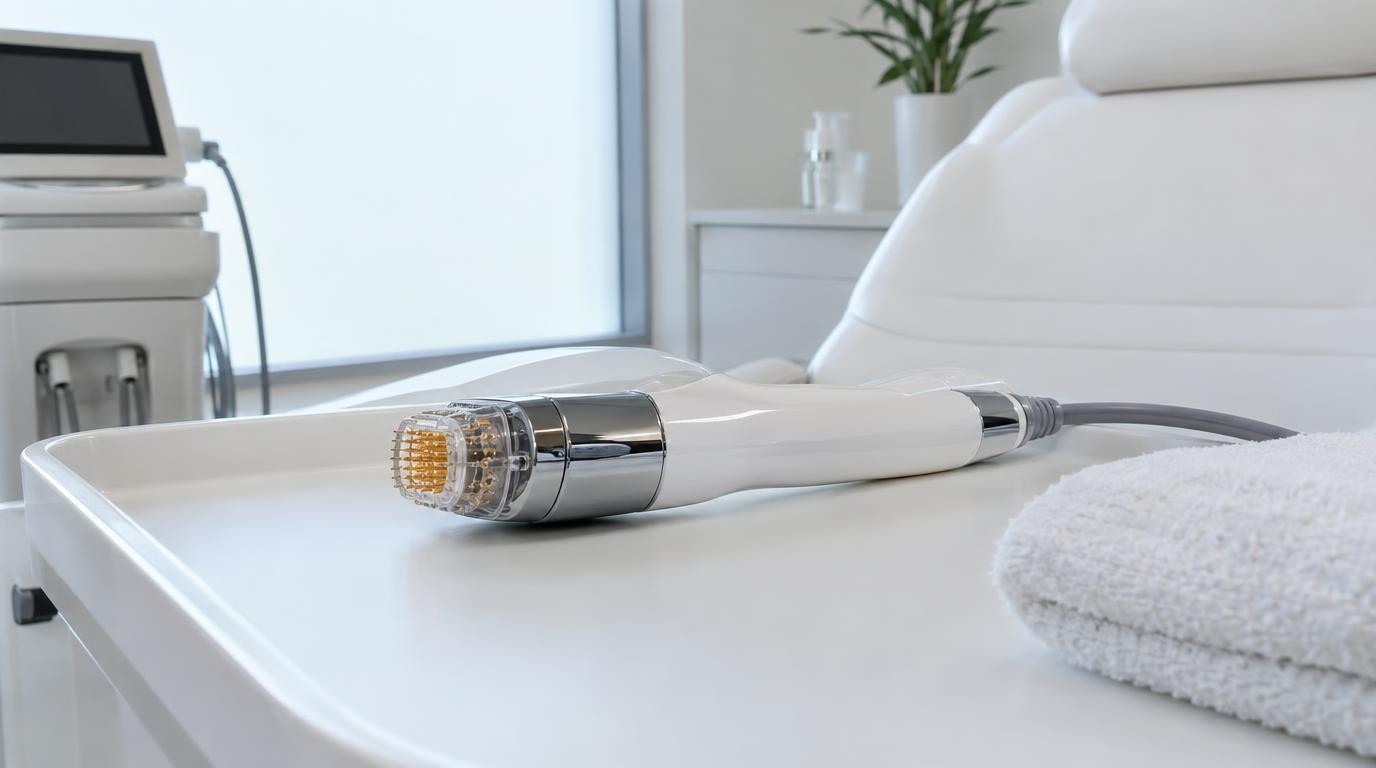
How radiofrequency energy reaches deeper skin layers
Unlike topical creams that sit on the surface, the microneedles in RF treatments bypass the outer skin barrier entirely. The needles penetrate to set depths, commonly between about 0.5 and 3.5 millimeters, depending on the device, the treatment area and the desired outcome. Once at the target depth, the radiofrequency energy is delivered directly into the tissue, heating the dermis enough to cause controlled changes in existing collagen fibers and stimulate fibroblasts to produce new collagen. A 2025 study in Plastic and Reconstructive Surgery Global Open looked back at 20 patients who had low-energy RF microneedling on the face combined with nanofat grafting, and found significant improvement in overall appearance and skin quality markers such as pore visibility, luminosity and fine wrinkles, assessed at 1, 3 and 12 months; because the study was small, uncontrolled and combined two treatments, its authors noted that larger controlled studies are needed to establish cause and effect. The controlled heating can create a tightening effect while the subsequent healing process rebuilds the skin’s structural support.
What skin concerns can RF microneedling address?
RF microneedling can improve mild to moderate loose skin on the face and body, including the abdomen, arms, thighs, and neck areas that often retain laxity after weight loss. Beyond general skin tightening, this treatment can also soften the appearance of stretch marks, surgical scars, and acne scars by remodeling the collagen within these areas. It may also help crepey skin texture, fine lines, and overall skin quality decline. For patients in Urbana, Maryland and surrounding communities, RF microneedling is one option for body concerns that topical products cannot reach.
Loose skin and skin laxity on the body
After weight changes, loose skin often shows up on the abdomen, which may not respond to creams or exercise, and on the upper arms, where it can create the sagging appearance many people refer to as bat wing arms. RF microneedling treatments target these specific areas by delivering energy where it can help restructure collagen and improve elasticity. Some patients notice their abdomen feels firmer and smoother after a series of treatments, with gradual improvement over several months as new collagen develops. Practitioners can adjust treatment depth and energy levels for different body areas.
Who is a good candidate for RF microneedling skin tightening?
Adults with mild to moderate skin laxity tend to be the best candidates for RF microneedling skin tightening treatments. The best results occur in patients whose skin still has some natural elasticity and can respond well to collagen stimulation. Candidates should be in generally good health, understand realistic expectations for outcomes, and be willing to commit to the recommended series of treatments. Patients with significant skin sagging may require more aggressive treatment approaches, which our team will discuss during consultation. Those addressing loose skin after GLP-1 assisted weight loss may find RF microneedling a helpful addition once their weight has stabilized.
Patients with mild to moderate skin laxity
Skin laxity exists on a spectrum, and RF microneedling works best when there is still adequate collagen production capacity remaining. Mild laxity might present as slightly loose skin with good texture, while moderate laxity shows more noticeable sagging but maintains skin elasticity. Patients with severe laxity or significant excess skin may ultimately need surgical intervention, and RF microneedling does not replace surgery for removing excess skin. A thorough consultation helps determine whether this treatment aligns with your specific concerns and goals. Our team evaluates skin quality, medical history, and treatment expectations to recommend an appropriate approach for each individual.
Risks, Side Effects and Who Is Not a Candidate
Common side effects of RF microneedling include temporary redness, swelling, and mild discomfort in the treated area that typically resolves within a few days. Some patients experience pinpoint bleeding during the procedure and temporary skin sensitivity afterward. More rare risks include burns from excessive heat, hyperpigmentation changes, or infection if post-treatment care instructions are not followed. Patients with active skin infections, autoimmune conditions affecting wound healing, or those currently pregnant should not receive RF microneedling treatments. Individuals with pacemakers or metal implants in the treatment area are typically not suitable candidates. Discuss your complete medical history with your provider to determine whether RF microneedling is appropriate for you.
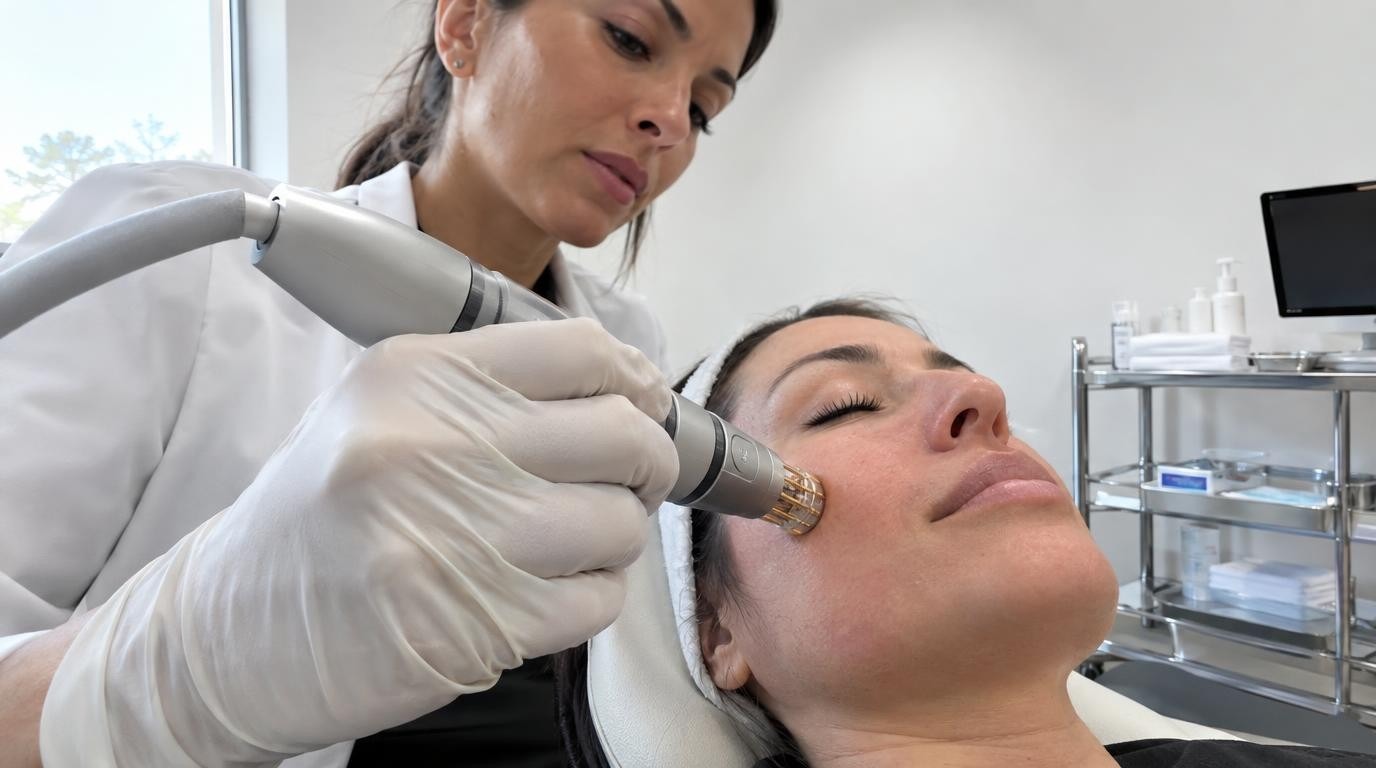
Is RF microneedling right for your skin tightening goals?
While skin tightening creams mostly offer surface-level hydration, RF microneedling addresses the structure of loose skin by stimulating new collagen production within the dermis. This treatment offers a non-surgical path to skin firming that topical products cannot achieve, with results that vary from person to person. Maryland Medical Clinic offers consultations to help you explore whether RF microneedling fits your specific skin tightening goals. If you’re in the Frederick, Maryland area and ready to learn what actually works for your loose skin, contact our team to schedule your personalized consultation today.
Frequently Asked Questions
How long does it take to see results from RF microneedling?
Some patients notice smoother texture within a few weeks, but firming builds gradually. Treatments are commonly scheduled as a series of about three sessions spaced four to six weeks apart, and results usually continue to develop for three to six months after the last session. Your provider will suggest a schedule based on your skin and goals.
What can I expect during RF microneedling recovery?
Most people return to normal activities within a day or two. For the first day or so, plan on gentle cleansing, skipping makeup on treated facial skin, and avoiding intense workouts, saunas and swimming. Use sunscreen daily and hold off on retinoids and exfoliating products until your provider says your skin has healed.
How is RF microneedling different from skin tightening creams?
A cream is a daily, at-home product that mainly affects the skin’s surface, while RF microneedling is an in-office procedure done in a short series of sessions. Many patients continue a good skincare routine, including daily sunscreen, alongside treatment to help protect their results.
Can RF microneedling help with loose skin after weight loss?
It can help mild to moderate loose skin after weight loss. It is generally best to wait until your weight has been stable for a while before starting, so the results are not affected by further changes. If you have large folds of excess skin, our team can talk with you about whether a surgical consultation makes more sense.
What depth do RF microneedling needles penetrate the skin?
Depth is set for each area during your treatment. Shallower settings are typically used on thinner, more delicate skin such as around the eyes, while deeper settings are used on thicker skin like the abdomen or thighs. Topical numbing cream is usually applied beforehand to keep you comfortable.
Who should avoid RF microneedling treatments?
Beyond the conditions listed in the risks section above, tell your clinician if you take blood thinners, have recently used isotretinoin, tend to form keloid scars, or get cold sores, since these may affect timing or preparation. Bring a list of your medications and past skin treatments to your consultation.
Related reading
- Non-Surgical Skin Tightening: How Technologies Firm Loose Skin
- Skin Tightening: What HIFU Research Reveals About Your Options
- Skin Tightening After Weight Loss: Treatment Options
This article is general information and is not medical advice. Talk to a licensed clinician about your own situation before making a treatment decision.
Next step
Have a question for Maryland Medical Clinic?
Physician-led medical weight loss and wellness in Frederick, Maryland. GLP-1 programs, peptide therapy, body and face sculpting, regenerative treatments and 3D body scan tracking, in one personalized plan.
Get in touchYour privacy
Nothing leaves this page without your OK.
If you allow it, Google Analytics and Meta help us see which pages patients find useful and whether our ads reach the right people. We never sell your information, and you can change your mind anytime. Privacy Policy