

LED Light Therapy for Weight Loss: Frederick Research
Last updated: July 11, 2026
LED Light Therapy for Weight Loss in Frederick
LED photobiomodulation has moved beyond wellness marketing into clinically validated territory, thanks to recent randomized controlled trials published in peer-reviewed sources confirming meaningful reductions in abdominal adipose tissue. For adults in the Frederick, Maryland area exploring non-surgical weight loss options, this shift from anecdotal support to rigorous clinical evidence makes LED Light Therapy a notably different conversation than it was even a few years ago.
What Is LED Light Therapy and How Does It Work for Fat Reduction?
LED Light Therapy for fat reduction relies on a process called photobiomodulation, in which specific wavelengths of red and near-infrared light penetrate the skin and are absorbed by adipose (fat) cells. This absorption triggers a cascade of biological events: the cell membranes become more permeable, triglycerides stored inside fat cells are released into the bloodstream, and the cell’s mitochondria produce increased adenosine triphosphate (ATP), fueling the body to process and eliminate that fat content.
Photobiomodulation targets fat cells without surgery, needles, or downtime. The wavelengths most commonly used in clinical settings fall between 630 and 940 nanometers, a range that reaches subcutaneous adipose tissue effectively while remaining within parameters supported by regulatory guidance.
LED Light Therapy and red light therapy refer to overlapping but not identical technologies. The term “red light therapy” often describes home-use devices with shallower penetration, while clinical LED systems used in a physician’s office typically deliver both red (around 630-660 nm) and near-infrared (around 810-940 nm) wavelengths through larger panel arrays. Maryland Medical Clinic’s in-office photobiomodulation devices deliver full-panel treatment that home devices cannot replicate in power or coverage area.
What Do Clinical Trials Show About LED Therapy for Abdominal Fat?
Randomized, double-blind clinical trials now provide structured evidence that LED photobiomodulation measurably reduces abdominal fat, with study protocols published in peer-reviewed medical literature.
A landmark study protocol published in BMJ Open describes a randomized controlled trial examining the use of photobiomodulation with red and infrared LED on waist circumference reduction in adult participants. The double-blind design means neither participants nor investigators knew who received active treatment versus a sham control, strengthening the validity of the findings. Participants underwent structured photobiomodulation sessions, and researchers tracked changes in waist circumference as a primary endpoint – a clinically meaningful measure because abdominal adipose tissue is strongly associated with metabolic health.
A separate clinical study published in 2024 in PubMed specifically examined LED photobiomodulation for reducing adipose tissue in the abdominal region, evaluating protocol parameters such as wavelength selection, energy density, and treatment frequency. Both studies demonstrate that consistent, appropriately dosed LED sessions produce statistically meaningful reductions in waist circumference and subcutaneous fat thickness compared to control groups.
What did the randomized controlled trials find?
The trials found that participants receiving active LED photobiomodulation showed significantly greater reductions in waist circumference than those in sham control groups. The trial protocols specified treatment to the abdominal region using calibrated LED arrays, with outcome measures assessed at defined intervals throughout the study period.
How significant was the waist circumference reduction?
While individual results vary based on baseline measurements and adherence to protocol, the clinical trials demonstrated that consistent photobiomodulation treatment produced meaningful reductions in waist circumference – a finding directly relevant to patients whose weight loss goals include reducing visceral and subcutaneous abdominal fat.
How Does FDA Guidance Affect LED Light Therapy Treatments?
The FDA has issued formal guidance on Photobiomodulation Devices under several regulatory classifications, including 21 CFR 878.4810 (general surgical and plastic surgery devices), 21 CFR 878.4850 (powered laser surgical instruments), 21 CFR 878.5400 (ultraviolet lamp devices), and 21 CFR 890.5500 (physical medicine devices). These classifications establish the regulatory framework under which LED and red light therapy devices may be marketed and used in clinical settings.
FDA-cleared devices have undergone premarket notification review, meaning the agency has determined they are substantially equivalent to legally marketed predicate devices. For patients, this clearance signals that the device meets baseline safety and performance standards.
What FDA device classifications apply to LED therapy?
LED photobiomodulation devices used in clinical weight management settings typically fall under the FDA’s physical medicine device classification (21 CFR 890.5500) and related surgical device categories, depending on their intended use and technological specifications. The FDA’s January 2023 guidance document on PBM devices clarifies submission requirements for manufacturers seeking market clearance.
What should patients look for in FDA-cleared devices?
Patients should ask their provider which devices are used and what their regulatory status is, and confirm that treatment protocols are designed and overseen by qualified healthcare professionals. Maryland Medical Clinic delivers light therapy under physician supervision, and your provider can explain the device used.
What Are the Treatment Protocols for LED Photobiomodulation?
Clinical LED photobiomodulation protocols for abdominal fat reduction involve consistent, structured sessions delivered over a defined treatment course.
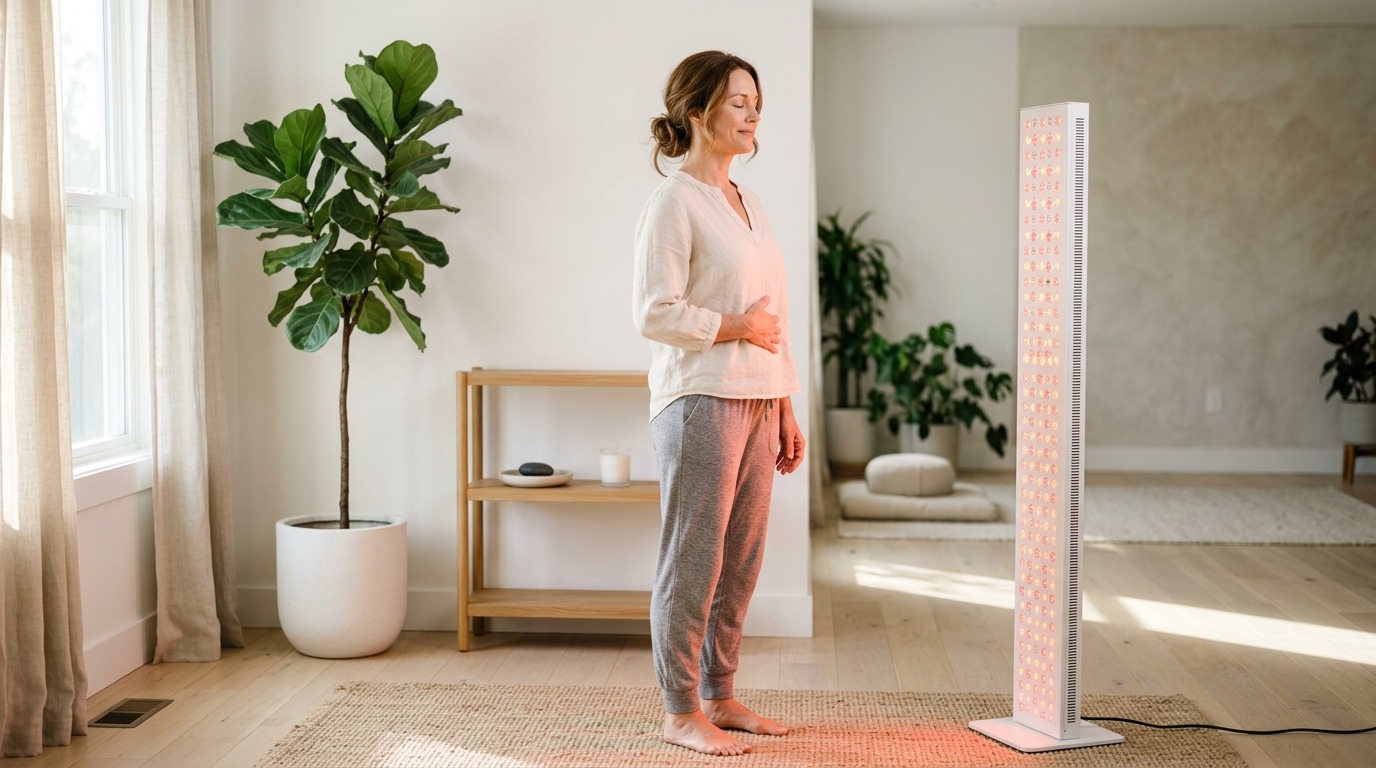
The typical treatment protocol calls for two to three sessions per week, with each session lasting approximately 20 to 30 minutes. The LED panel is positioned over the abdominal region, delivering calibrated red and near-infrared wavelengths across the treatment area. Most clinical protocols recommend a minimum of four to six weeks of consistent treatment before primary outcomes are assessed.
A treatment session involves the patient lying comfortably while the LED panel is positioned above the target area. Patients experience a gentle warming sensation; no discomfort or recovery time is required. Sessions fit easily into a lunch break, making LED therapy a practical complement to a broader medically supervised weight loss plan.
How many sessions are typically needed?
Clinical protocols generally recommend 8 to 12 sessions as an initial treatment course, with maintenance sessions continuing on a reduced schedule thereafter. The study protocols referenced in peer-reviewed literature used similarly structured treatment courses with consistent session frequency.
What does an LED therapy session involve?
During a session, the patient lies relaxed while the LED array delivers therapeutic wavelengths to the abdominal area. The treatment is non-invasive, painless, and requires no preparation or recovery time. Patients can return to normal activities immediately after each visit.
Who Is a Good Candidate for LED Light Therapy in Frederick?
LED photobiomodulation is well suited to Frederick-area adults who are near their target weight but carry stubborn abdominal fat that resists diet and exercise alone. It is also appropriate as a complementary treatment alongside medically supervised weight loss programs that include lifestyle guidance.
Ideal candidates are adults in good general health who have already made meaningful progress toward their weight loss goals and are looking for additional support in reducing localized fat deposits, particularly in the midsection. LED therapy is a non-invasive option that avoids the downtime and risks associated with surgical procedures.
Can LED therapy help if I have stubborn belly fat?
Stubborn belly fat – the kind that lingers in the midsection despite consistent diet and exercise – responds particularly well to photobiomodulation because the treatment directly targets subcutaneous fat cells. Clinical evidence from randomized trials specifically measured reductions in abdominal adipose tissue, making this an evidence-supported approach for this concern.
Is LED therapy suitable alongside diet and exercise?
LED photobiomodulation works best as part of a comprehensive weight management plan rather than as a standalone treatment. When combined with balanced nutrition and regular physical activity, photobiomodulation supports the body’s natural fat-processing mechanisms. Maryland Medical Clinic offers medically supervised weight loss programs that may incorporate LED therapy alongside other clinically appropriate interventions, including compounded Semaglutide and Tirzepatide protocols for eligible patients.
What Should Frederick Patients Expect From LED Light Therapy?
Frederick patients undergoing LED photobiomodulation can expect a gradual, natural-looking reduction in abdominal fat measured over weeks of consistent treatment. Results develop progressively, aligning with the body’s natural metabolic timeline for processing released lipids.

Most patients begin to notice initial changes within the first several weeks of consistent treatment, with more measurable results appearing after completing a full initial protocol course. Individual responses vary based on factors including baseline measurements, treatment adherence, and lifestyle factors.
How soon do patients see results?
Patients typically begin noticing initial changes within three to four weeks of consistent treatment, with more noticeable results after completing the full initial protocol course of 8 to 12 sessions. Ongoing maintenance sessions help sustain results over time.
Are there any side effects to consider?
LED photobiomodulation is non-invasive and well tolerated. The treatment does not involve surgery, injections, or significant heat, and most patients report only a gentle warming sensation during sessions. No significant downtime or recovery period is required. As with any medical treatment, patients should discuss their full health history with their provider before beginning therapy.
Is LED Light Therapy Right for Your Weight Loss Journey in Frederick?
LED photobiomodulation represents a clinically supported, non-invasive option for adults in Frederick and surrounding communities – including Germantown, Hagerstown, Thurmont, Urbana, New Market, Brunswick, Walkersville, Middletown, and Mount Airy – who want evidence-based support for reducing abdominal fat. The peer-reviewed clinical trial data, combined with FDA regulatory guidance, provides a foundation of transparency and accountability that sets this technology apart from unverified wellness trends.
If you are exploring non-surgical weight loss options and want to learn whether LED Light Therapy fits your goals, Maryland Medical Clinic’s team can provide an individualized assessment. Their medically supervised weight loss programs are designed to meet patients where they are and build sustainable, personalized plans.
To schedule a consultation at Maryland Medical Clinic in Frederick, Maryland, call (240) 341-1600 or visit the clinic’s services page to learn more about available treatment options.
Frequently Asked Questions
What is LED Light Therapy for weight loss and how does it work?
LED Light Therapy for fat reduction uses photobiomodulation, where specific wavelengths of red and near-infrared light penetrate the skin to target adipose cells. The light causes fat cell membranes to become more permeable, releasing triglycerides into the bloodstream while mitochondria produce increased ATP to fuel the body’s natural fat-processing mechanisms. Clinical wavelengths typically range from 630 to 940 nanometers.
What do clinical trials show about LED therapy for abdominal fat?
Randomized, double-blind clinical trials published in peer-reviewed sources confirm that LED photobiomodulation measurably reduces abdominal fat. A BMJ Open study protocol examined waist circumference reduction using red and infrared LED, while a 2024 PubMed study evaluated LED photobiomodulation for reducing adipose tissue. Both demonstrated statistically significant reductions in waist circumference and subcutaneous fat thickness compared to control groups.
How many LED therapy sessions are needed to see results?
Clinical protocols typically recommend 8 to 12 sessions as an initial treatment course, with 2 to 3 sessions per week. Each session lasts approximately 20 to 30 minutes. Most patients begin noticing initial changes within 3 to 4 weeks, with more measurable results appearing after completing the full protocol. Maintenance sessions continue on a reduced schedule thereafter.
Who is a good candidate for LED Light Therapy in Frederick?
LED photobiomodulation suits adults near their target weight who struggle with stubborn abdominal fat that resists diet and exercise. Ideal candidates are in good general health and seeking non-invasive support for reducing localized fat deposits, particularly in the midsection. The treatment works best as part of a comprehensive weight management plan alongside balanced nutrition and regular physical activity.
What should I expect during an LED therapy session?
During a session, you lie comfortably while an LED panel is positioned above your abdominal area. The treatment delivers calibrated red and near-infrared wavelengths across the target region. Patients experience only a gentle warming sensation with no discomfort. No preparation or recovery time is required, and you can return to normal activities immediately afterward. Sessions fit easily into a lunch break.
Is LED Light Therapy FDA-cleared and what classifications apply?
LED photobiomodulation devices used in clinical settings typically fall under the FDA’s physical medicine device classification (21 CFR 890.5500) and related surgical device categories. FDA-cleared devices have undergone premarket notification review, confirming they meet baseline safety and performance standards. Patients should ask which device their provider uses, what its regulatory status is and who supervises treatment.
Does LED Light Therapy have side effects?
LED photobiomodulation is non-invasive and well tolerated with minimal side effects. The treatment does not involve surgery, injections, or significant heat. Most patients report only a gentle warming sensation during sessions. No significant downtime or recovery period is required. As with any medical treatment, patients should discuss their full health history with their provider before beginning therapy.
Sources
- Study protocol for the use of photobiomodulation with red or infrared LED on waist circumference reduction: a randomised, double-blind clinical trial
- Clinical Protocol Effects With LED Photobiomodulation for Reducing Adipose Tissue in the Abdomen Region
- Clinical Protocol Effects With LED Photobiomodulation for Reducing Adipose Tissue in the Abdomen Region – PubMed
- Photobiomodulation (PBM) Devices – Premarket Notification [510(k)] Submissions | FDA
- What to Look for in Red Light Therapy: A Product Guide Backed by …
- Study protocol for the use of photobiomodulation with red or infrared LED on waist circumference reduction: a randomised, double-blind clinical trial
Next step
Have a question for Maryland Medical Clinic?
Physician-led medical weight loss and wellness in Frederick, Maryland. GLP-1 programs, peptide therapy, body and face sculpting, regenerative treatments and 3D body scan tracking, in one personalized plan.
Get in touchYour privacy
Nothing leaves this page without your OK.
If you allow it, Google Analytics and Meta help us see which pages patients find useful and whether our ads reach the right people. We never sell your information, and you can change your mind anytime. Privacy Policy